

Protect the repair, then rebuild everything.Rehabilitation after hand or wrist surgery
After surgery, the hand needs precise, carefully dosed rehabilitation. In the first weeks, we protect what the surgeon has repaired while managing swelling (oedema), pain and the scar. Then we gradually restore finger mobility, followed by strength and fine movements.
Marie follows your surgeon's protocol and methods based on the latest scientific evidence. With a doctor's prescription, sessions are covered by basic health insurance (LAMal).
“You're allowed to move your hand, not to use it. »
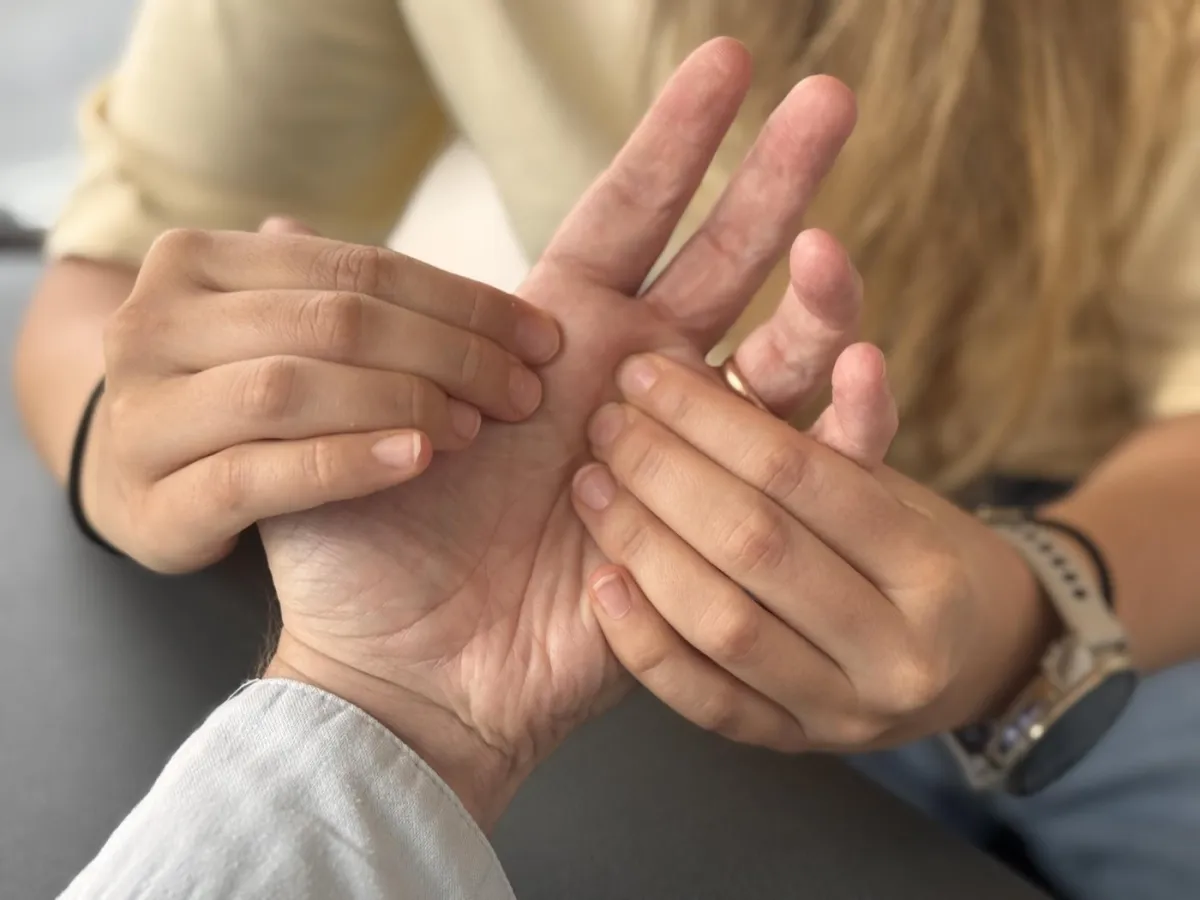
The operations we see most often
- Carpal tunnel release
- Flexor tendon repair
- Extensor tendon repair
- Surgically treated wrist fracture
- Grafts and complex wounds
- Elbow or shoulder surgery
Just had surgery? Book as soon as you have your prescription: with the hand, starting at the right time matters as much as the exercises. To prepare, read our 5 tips after hand surgery and the 4 priorities after flexor tendon surgery.
Cast, scar, tendinitis: it can all be rehabilitated.Wrist fractures, scars and arm pain
A painful or stiff hand, wrist or elbow soon gets in the way of work, sport or playing an instrument. A thorough assessment finds the cause, so we can build a progression suited to your activities.
Wrist fracture
Cast or surgery: after immobilisation, the wrist is often stiff, swollen and weak. We work on pain and flexibility, then grip strength.
5 tips for a good recovery →Scars and grafts
An adherent scar can restrict movement and stay sensitive. With suitable massage and advice on moisturising and protection, we gradually make it more supple. After surgery, this usually starts around day 15.
How to massage a scar →Tendinitis and pain
- Shoulder, elbow or wrist tendinitis
- Tennis elbow (lateral epicondylitis)
- Nerve pain in the arm
From the elbow to the fingertips.The hand, wrist and elbow conditions we treat
Whether or not you have had surgery, each condition has its own rehabilitation protocol. Marie is trained in all the conditions below and works with your surgeon or doctor. Can't find yours? Ask us.
Hand and fingers
14 conditions
- Flexor tendon injuriessurgical repair, adhesions after repair
- Extensor tendon injuries from a cut
- Mallet fingerdroop of the fingertip
- Finger (phalanx) and metacarpal fractures
- Finger sprain or dislocation
- Severe thumb sprainulnar collateral ligament tear, “skier's thumb”
- Sports injuries of the hand
- Finger amputations
- Hand infections(phlegmon)
- Trigger finger
- De Quervain's tenosynovitis
- Dupuytren's disease
- Finger and thumb arthritis (non-surgical)including thumb base arthritis
- Thumb joint replacement and trapeziectomy
Wrist
6 conditions
- Fracture of the radius or ulna at the wristin a cast or surgically treated
- Scaphoid fracture
- Scapholunate ligament injury
- TFCC detachmenttriangular fibrocartilage complex, little-finger side
- TFCC perforation
- Wrist arthritisSLAC and SNAC wrist
Elbow and arm
10 conditions
- Elbow dislocation
- Humeral shaft fracture
- Distal humerus fracture
- Ulna fractures at the elbow
- Radius fractures at the elbow
- Terrible triad of the elbowdislocation with associated fractures
- Radial head replacement
- Total elbow replacement
- Biceps tendon rupture at the elbowdistal detachment
- Tennis elbow and golfer's elbowlateral and medial epicondylalgia
Nerves and pain
2 conditions
- Nerve injuries and compressionselbow, forearm, wrist and hand, including carpal tunnel
- Complex regional pain syndrome (CRPS)also known as algodystrophy
A precise movement, a precise exercise.In your sessions: analytical hand therapy on an adjustable therapy board
Marie works with an adjustable therapy board (known in French as a “plateau canadien”): a tilting rehabilitation table fitted with hand-specific accessories and tools (pegs, cones, handles, clips, resistance).
Each exercise targets a well-defined movement, such as bending a finger, squeezing a clip or turning the wrist. It is fine-tuned to the millimetre, at the pace of your recovery.
Isolate the movement
We work on one finger, joint or tendon at a time, without the rest of the arm compensating. That is how the small ranges of movement that matter are recovered.
Fine-tune the progression
Board angle, resistance, size and shape of objects: everything is adjusted, session after session, to what the repair allows.
Regain fine movements
Grasping, pinching, turning, placing: the exercises reproduce the movements of daily life, work, sport or an instrument.
What we work on in your sessions
- A measured assessmentRange of movement, grip strength and sensation are measured, then compared from session to session.
- Swelling and painDrainage, hand positioning, advice for the night: less swelling means more movement.
- Your scarMassage and softening so it doesn't stick or restrict movement.
- SensationSensory re-education for a numb area, desensitisation for an over-sensitive one.
- MobilityGentle manual mobilisation and active exercises, finger by finger, within the limits of the protocol.
- Strength and dexterityGrip, pinch, endurance and fine movements, on the therapy board.
- Your home programmeA few targeted exercises, adapted to each stage, to keep progressing between sessions.
- Back to your activitiesWork, sport or instrument: we finish with the movements you need.
Your hand is your instrument.
After hand surgery or injury, playing again takes more than regaining mobility: finger independence, a fine touch, endurance. Bring your instrument: we build your return to playing around it.
Without surgery too: tired or weakened small hand muscles (interossei, lumbricals), poor hand stability, difficult finger stretches, laboured coordination between the fingers that bend and those that straighten. Marie then carries out a full hand assessment, with muscle-by-muscle strength testing, followed by targeted work on the intrinsic muscles.
One step at a time.How your rehabilitation works
Every hand has its own pace. We set concrete goals together, then adjust them as the sessions go on.
- 01
The assessment
Pain, swelling, mobility, strength, sensation and the movements you find difficult: we review your hand and your goals.
- 02
Protect and relieve
Reduce pain and swelling, keep the hand raised, and protect the repair with the prescribed splint, following the surgeon's protocol.
- 03
Regain mobility
Precise, progressive exercises for the fingers, wrist and elbow, to repeat at home when allowed.
- 04
Strength and fine movements
Strengthening, grip and dexterity, so you can return to work, sport or your instrument with confidence.
- With whom
- Marie LainéPhysio Genève hand therapy quality group
- Cover
- LAMalwith a doctor's prescription
- Languages
- FR · EN · ESFrench, English, Spanish
- Where
- Physio CornerChemin Daniel-Ihly 19, Petit-Lancy · parking at the entrance
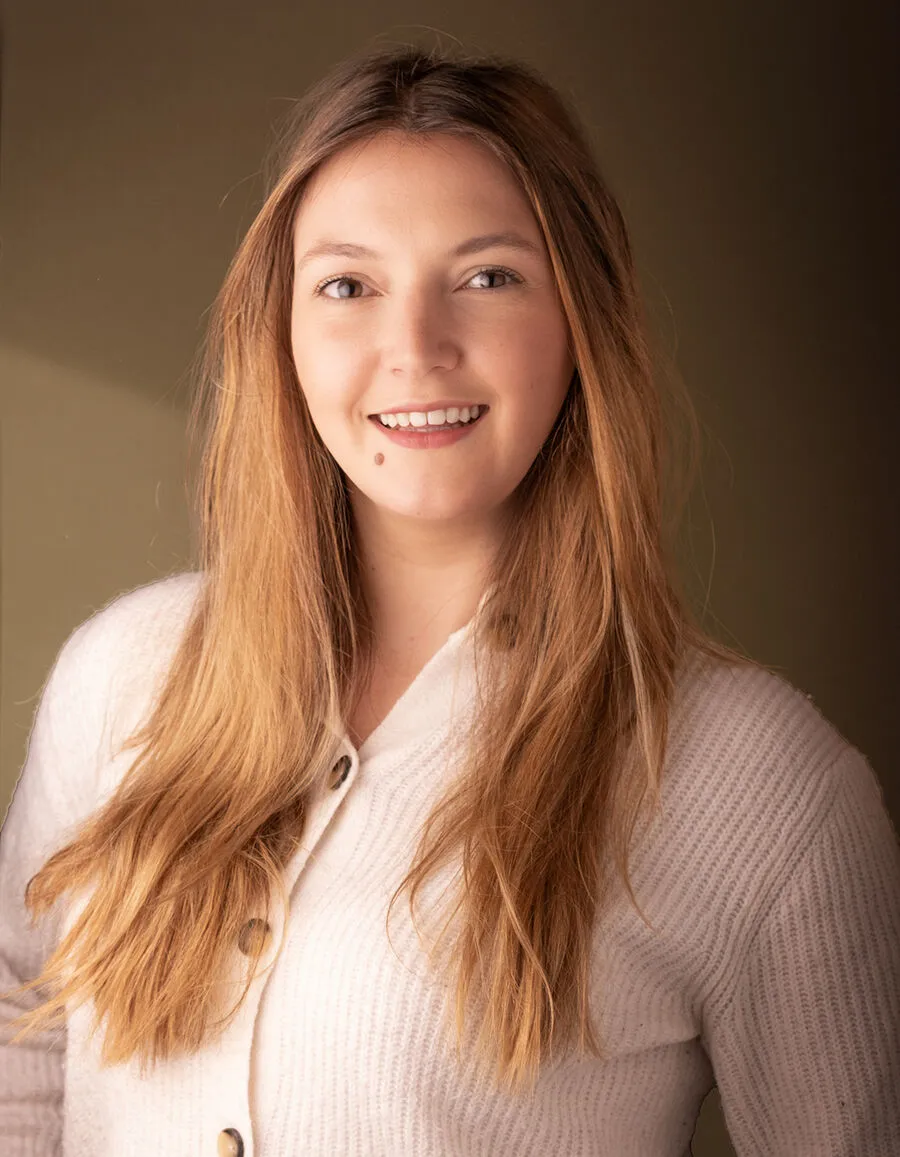
Marie LainéYour hand physiotherapist in Geneva
Marie specialises in treating the upper limb, from the shoulder to the fingers, and in particular in hand and wrist rehabilitation after surgery. She also manages the healing of complex wounds. Her approach is based on evidence-based protocols, with rigour and good humour.
Marie is a member of the Physio Genève hand therapy quality group. She regularly reviews her practice with fellow specialists and takes part in ongoing hand therapy training.
Your questions, our answers.Frequently asked questions about hand therapy
Another question? Message us on WhatsApp or call 022 570 18 99.
Do I need a prescription?
For sessions to be covered by basic health insurance (LAMal), you need a prescription from your doctor or surgeon. Without one, sessions are not covered by basic insurance.
When should I start after hand surgery?
It depends on the operation and your surgeon's protocol. After a flexor tendon repair, for example, rehabilitation usually starts 3 to 5 days after surgery. The simplest thing is to book as soon as you have your prescription.
How long do I need to wear the splint?
Your surgeon decides. After a tendon repair, the splint is often worn full-time for 4 to 6 weeks and only removed for exercises supervised by the physiotherapist. It protects the repair while allowing controlled movement.
What should I do at home after a wrist fracture?
Keep your arm raised, on cushions even at night: less swelling means less pain. Keep moving whatever isn't immobilised (fingers, elbow, shoulder) to avoid stiffness. Some pain is normal at first, but it should stay bearable: if it becomes severe or constant, or if your cast or splint is uncomfortable, let us know.
Vitamin C may help reduce the risk of CRPS (persistent pain and stiffness): ask your doctor about it. All the advice is in our article on wrist fractures.
Which signs should worry me after hand surgery?
Severe pain that persists, sudden swelling, redness, warmth or discharge from the wound are warning signs. If in doubt, contact your surgeon or physiotherapist promptly.
How many sessions will I need?
The number of sessions depends on the operation or injury, your recovery and your goals. We review progress regularly and adapt the pace: more frequent at first, then further apart as you become independent with your exercises.
What should I bring to the first session?
Your prescription, the surgical report if you have one, your recent X-rays or scans, and any splint you have been prescribed.
How do I massage a scar on my hand?
Once the wound has fully closed and your doctor agrees, gentle, regular massage helps keep the scar supple. The technique, how often to do it and the warning signs are explained in our article on scar massage. Marie will also show you the right technique in your sessions.

